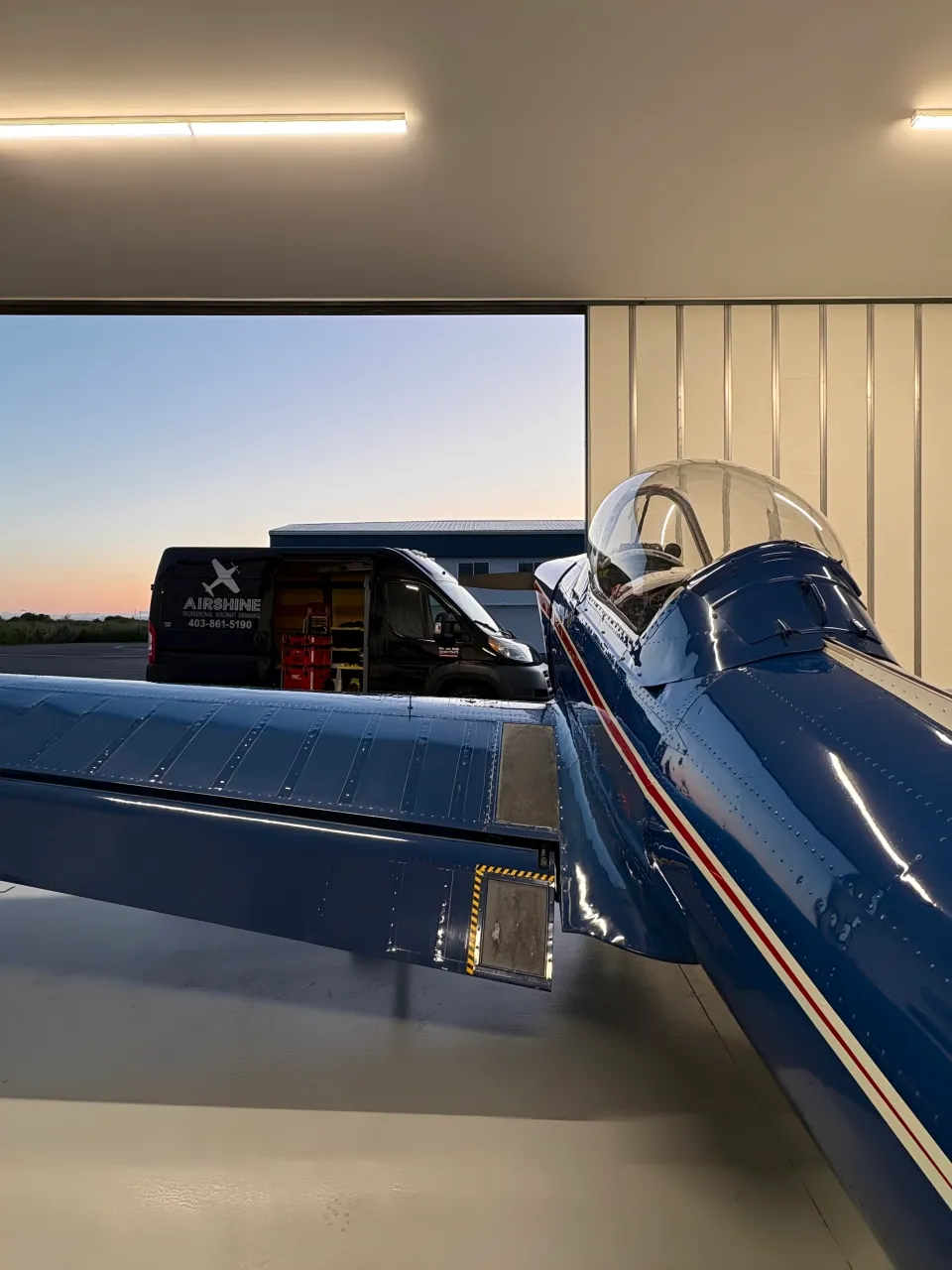
A big share of the GA fleet wears paint older than its pilots. The good news: decades-old paint often has more life in it than it looks. The honest news: not always. Here’s how to tell the difference.
Why old paint goes flat
Paint fails from the top down. UV and weather kill the outermost few microns. Pigment oxidizes, the surface goes chalky and micro-rough, and light stops reflecting cleanly. Under that dead layer, there’s frequently sound paint with real colour still in it.
What correction actually does
Machine correction works through that dead layer in controlled stages:
- Decontamination first. Decades of exhaust film, oil and embedded grit come off before any polishing. Otherwise you’re grinding the dirt into the paint.
- Cutting stage. A measured abrasive pass removes the oxidized layer. On old single-stage paint you can watch the pad pull colour. That’s the dead pigment coming off.
- Refining stage. Finer polish removes the scratch pattern of the cut and brings up gloss.
- Protection. Freshly corrected paint is bare to the world. Sealant or ceramic goes on the same day, or the clock starts again immediately.
Worked panel by panel, the transformation on a 1970s airframe can be startling: deep colour, real reflections, hardware that reads bright against it.
When correction is the wrong answer
Old paint has a finite thickness, and every correction spends some of it. There are honest limits:
- Paint worn through or flaking. Polishing has nothing to work with.
- Cracking and checking. That’s failure through the film, not on top of it.
- Corrosion underneath. A shine over active corrosion is a disservice, not a detail.
An assessment sorts this out before anyone spends money: where the paint is thick enough to work, where to go gently, and where the truthful recommendation is a paint shop instead of a polisher.
The difference matters. Restoration costs a fraction of a repaint and takes days, not weeks, but only when the paint underneath deserves it.