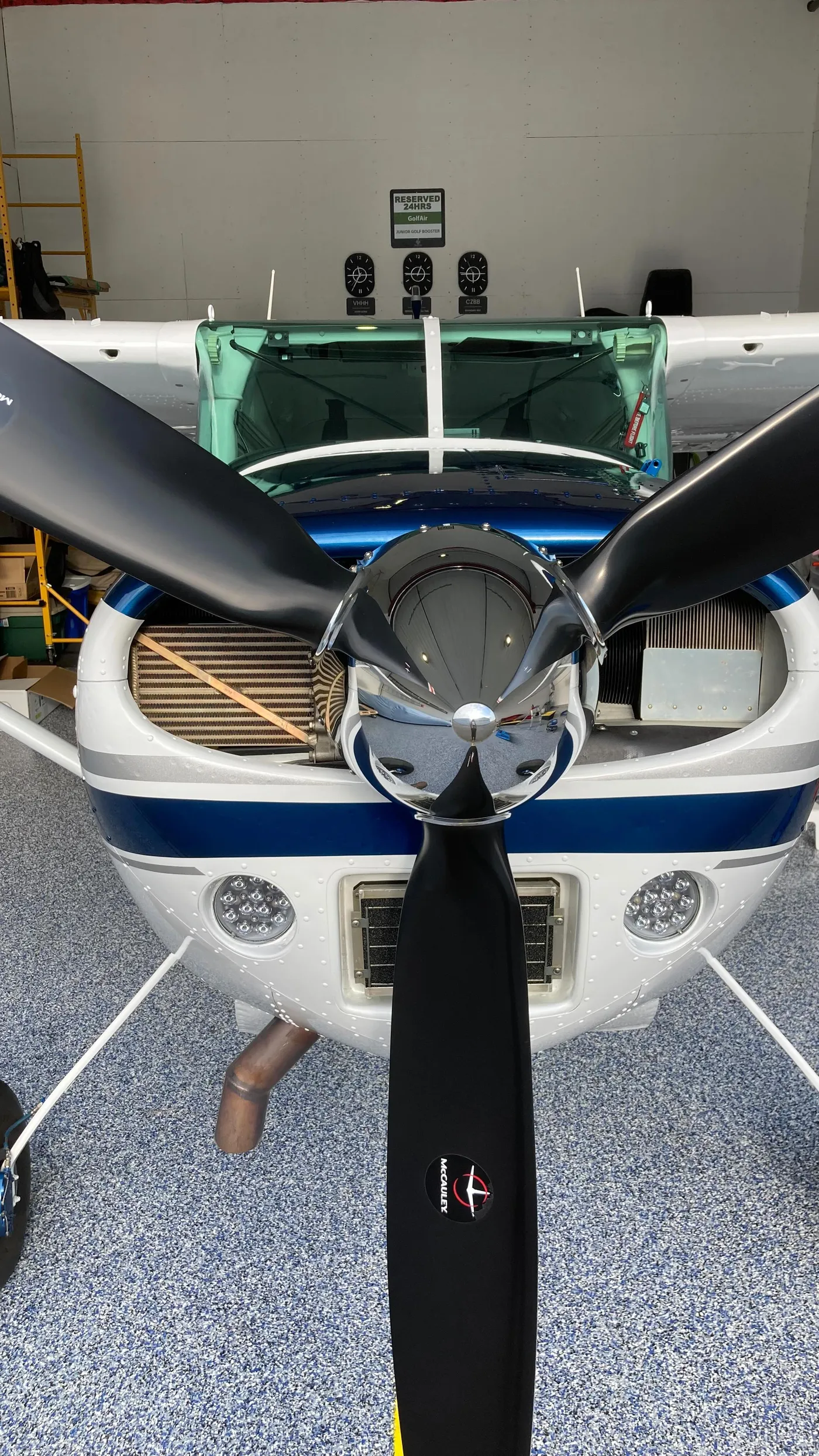
Aircraft paint has a harder life than car paint, and Alberta makes it harder still. Here’s what’s actually attacking your finish, and what each layer of protection does about it.
The four things eating your paint
UV, amplified. Every hour at altitude is an hour closer to unfiltered sun. UV breaks down the resins that hold pigment, which is why paint doesn’t just fade, it goes chalky. That chalk is oxidation: the top layer of your paint, dead.
Exhaust and oil film. Piston exhaust carries lead and combustion byproducts that bond to the belly and empennage. Left through a season, the film is mildly acidic and stains gel-like into the surface. It’s also the first thing a prospective buyer runs a finger across.
Bug etching. Bug remains are acidic and they cook onto leading edges. On a summer cross-country, the damage starts within days, not months. Etching that sits through a hot week can leave marks correction has to polish out later.
Freeze-thaw and prairie grit. Moisture works into micro-scratches and chips, freezes, and expands. Combined with wind-driven grit on the ramp, unprotected paint develops a dull, sandblasted leading edge surprisingly fast.
The protection ladder
Think of it as three rungs. Each rung buys more time between the attack and the damage.
- A proper wash and seal, regularly. Removes the acidic film before it bonds, and leaves a sacrificial sealant layer. This is the single highest-value habit for a working aircraft.
- Paint correction. Once oxidation and etching are in the paint, no wash removes them. Machine polishing takes off the dead layer and restores gloss, but it removes material, so it’s something you do occasionally and protect well afterwards.
- Ceramic coating. A cured layer that takes the UV and chemical hit instead of your paint. Water and bug remains release far more easily, so every wash afterwards is faster and gentler. On an aircraft you plan to keep, or sell well, it’s the strongest value play.
The honest rule
Protection is cheap; paint is not. A repaint on even a modest single runs into the tens of thousands and takes the aircraft down for weeks. Almost everything above exists to push that day as far into the future as possible.
If you’re not sure where your paint sits on that curve, an assessment tells you in an hour, panel by panel, before anyone quotes you anything.