Ceramic coating is simultaneously the best protection most aircraft can get and the most oversold product in detailing. Here’s the straight version.
What it is
A ceramic coating is a liquid polymer that cures into a hard, chemically bonded layer on top of your paint. Unlike wax or sealant, it doesn’t sit on the surface, it cross-links to it. That’s why it lasts years instead of weeks.
What it actually does
- Takes the UV hit. The coating degrades instead of your paint resins. In practice: dramatically slower oxidation.
- Sheds contamination. Bug remains, exhaust film, oil and water release far more easily. The aircraft stays cleaner between washes, and every wash is faster and gentler on the paint.
- Deepens gloss. A corrected, coated surface has that wet, deep look, and keeps it.
- Protects your correction. Paint correction removes material; you don’t want to repeat it often. A coating locks in the result.
What it doesn’t do
- It’s not armour. A coating resists chemical attack and micro-marring, not rock chips, hail or hangar rash.
- It doesn’t fix bad paint. A coating seals in whatever is underneath, including oxidation and swirl. That’s why correction comes first, always.
- It’s not maintenance-free. “Never wash again” is a sales line. The aircraft still needs washing; the coating just makes it easier and safer.
- It doesn’t last forever. Multi-year, yes, with sensible care. Exact life depends on hangaring, hours and how it’s washed.
The aircraft-specific part
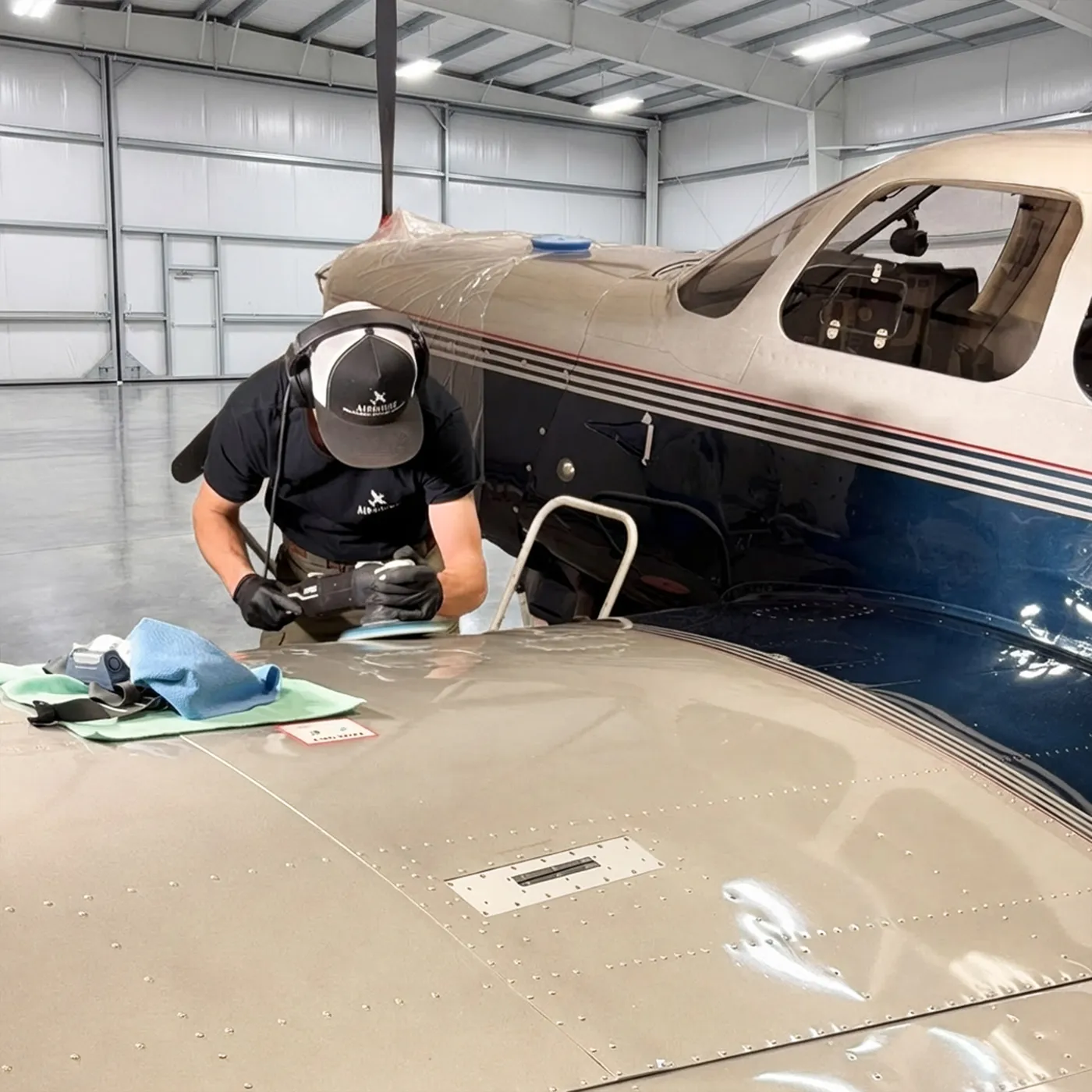
Coating an airframe is not coating a hood. There are transparencies that must never see the wrong compound, static wicks and probes to work around, and fabric or bare-metal surfaces that need different systems entirely. The application matters as much as the product, which is why who applies it matters more than which brand is on the bottle.
If you’re weighing it: the aircraft that benefit most are the ones flown regularly and kept long, and the ones heading to market. A coated, corrected exterior photographs like a fresh paint job at a fraction of the cost.